
When the Presentation Becomes the Substitute
So it’s been a while since I’ve posted anything. And with that the posts haven’t been all that much. And this was a chat I had with a friend last week that got me thinking on this piece of writing.
There’s a reason for not posting frequently. In my opinion, the world is full of people who want to talk about what they’re going to do. (and a lot of it is also generated using AI and you end up with I think the term is AI slop) Then there’s another group of people who are fearful to even talk about what they would like to do, and they shut themselves and their dreams down into a very minimal, managed existence of living.
Living With “If” Part One: Keeping Your Head
Note: These are personal reflections written from personal experience and perspective, not claiming authority.
The first time I was introduced to Rudyard Kipling’s poem If I was 18 years old, actually just going on 19. The person who introduced it to me was a man who became my boss and friend in the world of covert operations that I worked in.
At that time in my life I was going through several very difficult situations. Not too long prior I had lost very close friends of mine in a car accident in my hometown where three people tragically passed away. My parents had divorced around the same time and then I was contending with a personal issue that had risen to the surface, one of those metaphorical monsters that had been sleeping under the rug for years and no longer had anywhere to hide. Confronting it caused an enormous fallout on several levels of my life, including on a business level.

Missed Flights Open Other Doors
I think arriving at the airport that morning my mindset was actually pretty neutral. There were a lot of changes going on in my personal life and even though I was travelling to a country that a lot of people would probably be excited about visiting, I'd sort of filed it in my head as just another flight and another job to do.
I've been fortunate enough in my life to travel to somewhere in excess of, give or take, 80 countries and generally I try not to let the excitement of travelling disappear on me. But I had a lot on my mind at the time.
As usual I'd arrived two hours early and I had no check-in baggage. I actually do those things specifically to avoid unnecessary complications at airports, so I couldn't really have predicted in any way shape or form what was about to follow.
Standing on the Outside: A Reflection on Loneliness, Purpose, and the People We Choose
There’s a quote often attributed to Robin Williams:
“I used to think the worst thing in life was to end up alone. It’s not. The worst thing is to end up with people who make you feel alone.”
I don’t feel lonely. I think there’s a profound difference between feeling on the outside and feeling lonely. The interesting thing is that I probably remember that quotation from as early as my late teens or possibly my early twenties, and it has stayed somewhere in my mind ever since.
I think we go through different phases of life. We have an ascension phase where we’re growing up and learning our place in the world and what we’re doing. Maybe that’s our job or college education, finding what we feel is our place within reality as we perceive it.

Martial Arts
I think martial arts is probably one of the oldest practices we’ve been doing as human beings to confront chaos and put it into order, as well as to learn the strength in restraint and how that’s just as important. You simultaneously possess the capacity to exercise strength and cause damage, but you’ve accumulated the wisdom of when to do this and when not to do this.
I also think, like many religious scriptures, spiritual philosophies, theologies and other such practices, it orientates around the axioms of living, of caring, responsibility, aiming upward at the highest value of responsibility and truth that you can find and doing your best to work towards that. Picking courage over fear, seeking perfection of your character even though there’s no such thing as perfection in that respect, learning to have faith and endeavour in the face of adversity, respecting others despite how hard that can be in the short term, especially if you’re wronged somehow, and refraining from violent behaviour.
Craftsmanship
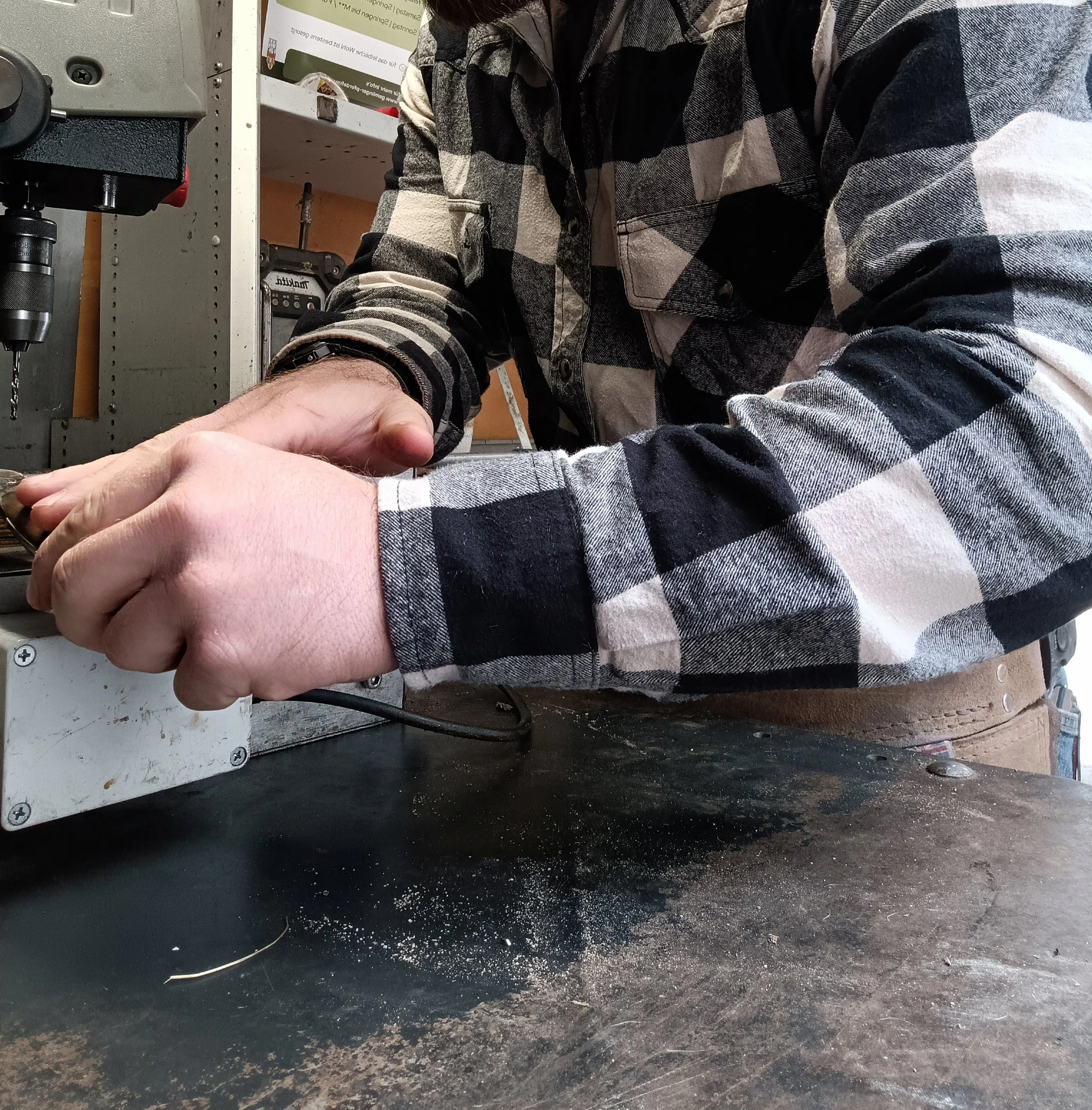
Craftsmanship to me isn’t just about being good at something. It’s like a discipline, again like martial arts. It’s something that you continue to do for the rest of your life and it’s probably something you never reach the level of perfection on. Being good at it is absolutely no harm, but it’s a disciplined art form that you continue to try and get better at.